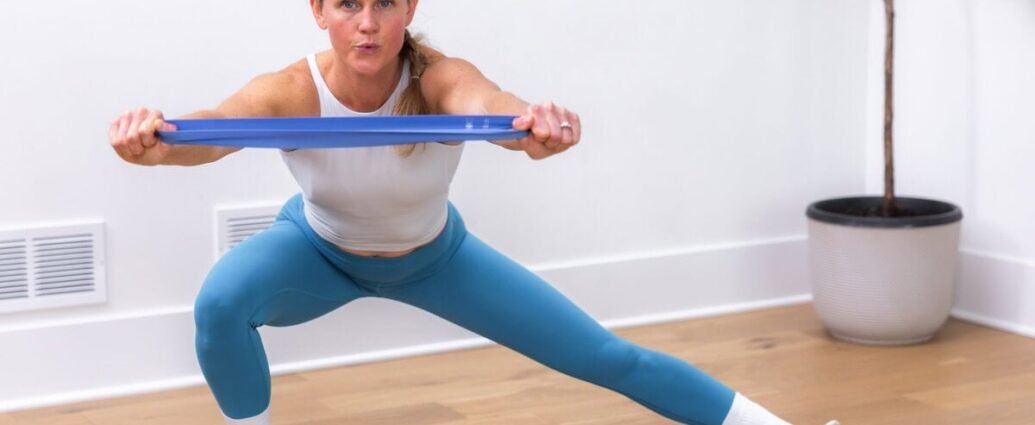
In today’s hectic world, fitness often feels complicated: gym memberships, heavy weights, advanced machines, and high-intensity workouts everywhere you look. But what if strength training could be simple, portable, accessible, and incredibly effective? Enter the small but mighty resistance bands, the training tools behind a quiet revolution in the world of fitness.
Whether one is a complete beginner, returning to exercise after a break, or just looking for a versatile way to strength-train at home, resistance bands provide a safe, low-impact, and powerful path to strength, flexibility, and endurance without the bulk or cost associated with traditional equipment.
Why Resistance Bands? The Big Benefits in a Small Package
For such a simple design, resistance bands are surprisingly effective tools with scientifically proven benefits.
1. They Work for Every Fitness Level
They come in resistance levels of light, medium, heavy, and extra heavy, and they are perfect for both the beginning and advanced exerciser. You can start slow and progress as your strength grows.
2. They’re Low-Impact but High-Reward
Unlike heavy weights, bands create tension without putting any stress on your joints. This makes them ideal for:
- Older adults
- People in injury rehabilitation
- Anyone who wants to enjoy gentle yet effective strength training
3. They Work More Muscles at Once
Bands challenge your stability, bringing in more of the smaller supporting muscles that free weights can sometimes miss. This, in turn, leads to better balance, posture, and mobility.
4. They’re Portable and Affordable
Throw them in a bag, keep them in your desk drawer, or take them on the road-they weigh practically nothing. And they cost a fraction of dumbbells or other weight training equipment.
5. They Provide Consistent Tension
Unlike free weights, resistance bands create tension throughout the entire movement, so every inch of every rep counts.
It is intriguing to consider whether the Convention on the Rights of the Child will provide the necessary impetus for radical changes in the way children are perceived, both culturally and legally.
Types of Resistance Bands (And How to Choose Yours)
Not all bands are the same. The right one for you depends on your goals and comfort level.
1. Loop Bands (Mini Bands)
- Small, circular bands are great for
- Glute activation
- Hip strength
- Lower-body workouts
2. Long Loop Bands (Pull-Up or Power Bands)
Large continuous loops are used for:
- Full-body training
- Assisted pull-ups
- Squats and deadlifts
- Mobility work
3. Tube bands with handles
Often used for:
- Upper-body training
- Chest presses
- Rows
- Triceps and biceps work
4. Therapy Bands (Flat Bands)
Light, flat, stretchy bands ideal for:
- Beginners
- Rehab exercises
- Gentle stretching
As a beginner, a set of three bands normally works: one light, one medium, and one heavy.
How to Use Resistance Bands Safely and Effectively?
Before doing exercises, it is important to learn some basics:
1. Light Start
Start with a lighter band to learn proper form in your first sessions. Proper technique is always more important than resistance level.
2. Properly Anchor the Band
Whether you are fixing it under your feet or around a pole, make sure the band is secure to avoid snapping or slipping.
3. Keep Tension
During each exercise, always keep tension in the band both on the pull and return phases of the movement. Never let it go slack.
4. Control the Movement
Slow, sustained movements mobilize more muscle fibers with less risk of injury.
5. Don’t Overstretch
That is to say, bands should not be stretched beyond two times their rest length to ensure durability or to avoid breaking.
Simple Full Body Beginner Resistance Band Exercises
Below is a balanced starter routine you can do 3–4 times a week. Complete 10–15 reps per exercise and 2–3 sets in total.
Upper body
1. Banded Row (Back & Shoulders)
Equipment: Tube band with handles or long loop band
How to do it:
- Sit or stand with the band anchored in front of you.
- Hold the ends with the palms of your hands facing each other.
- Pull the band toward your ribs, squeezing your shoulder blades together.
- Slowly return to the start.
Why it works: Strengthens posture muscles and counters slouching.
2. Chest Press (Chest & Arms)
Equipment: Tube band with handles
How to do it:
- Anchor the band behind you- around a post or door anchor.
- Step forward to create tension.
- Push your arms forward, straightening them at chest level.
- Slowly bend your elbows back.
Why it works: A great at-home alternative to push-ups or bench pressing.
3. Banded shoulder press (shoulders and upper back)
Equipment: Long loop or tube band
How to do it:
- Stand in the band.
- Bring handles or band ends to shoulder height.
- Press arms overhead.
- Descend slowly.
Why it works: Strengthens shoulders without using heavy weights.
Lower Body:
4. Banded Squats Glutes & Legs
Equipment: Mini loop
How to do it:
- Place the band above your knees.
- Stand feet shoulder-width apart.
- Squat down, pressing knees outward slightly.
- Get up again.
Why it works: Activates glutes more effectively than bodyweight squats alone.
5. Standing Leg Abductions (Outer Hips & Glutes)
Equipment: Mini loop
How to do it:
- Stand with the band around your ankles.
- Lift one leg out to the side, keeping toes forward.
- Return slowly.
- Repeat on the other side.
Why it works: Great for hip stability and balance.
6. Glute Bridge with Band – Glutes and Hamstrings
Equipment: Mini loop
How to do it:
- Lie on your back with knees bent, band just above the knees.
- Lift your hips to the ceiling, simultaneously pushing your knees outwards.
- Slow down.
Why it works: Strengthens your glutes—essential for lower-back health.
Core:
7. Banded Russian Twists
Equipment: Long loop or therapy band
How to do it:
- Sit with knees bent, holding the band ends.
- Twist your torso from side to side slowly.
Why it works: Builds rotational core strength.
Key:
8. Banded Dead Bug
Equipment: Therapy band
How to do it:
- Lie on your back with your arms straight, holding a taut band overhead.
- Lower the opposite arm/leg toward the floor, then switch.
Why it works: Engages deep core stabilizers that protect your spine.
Putting It All Together: A Simple Routine
Warm-Up (3–5 minutes):
- Light marching, arm circles, or hip movements.
Workout (25–30 minutes):
- Rows — 12 reps
- Squats – 15 reps
- Chest Press — 12 reps
- Leg Abductions — 12 reps/side
- Shoulder Press — 12 reps
- Glute Bridges — 15 reps
- Russian Twists — 20 reps total
- Repeat 2–3 times.
Cool Down (5 minutes):
- Gentle stretching to include chest, hamstrings, shoulders, and hips.
Tips for Getting Stronger with Bands:
1. Increase Resistance Gradually
When you are able to perform 15–20 reps with good form, move from a light band to a medium band.
2. Move Your Foot or Hand Position
Shortening the band immediately increases tension.
3. Slow Down
3 seconds out + 3 seconds back = deeper muscle engagement.
4. Use Bands with Other Workouts
Mix bands with walking, Pilates, yoga, or bodyweight exercises for a balanced routine.
5. Stay Consistent
Three times a week for 4 to 6 weeks will noticeably improve strength and tone.
Common Mistakes to Avoid
- Letting the band snap back without control
- Using a band that’s too heavy, compromising form
- Slouching during rows or presses
- Overstretching bands
- Forgetting to breathe-it does happen!
- Small corrections can make a big difference in your results.
Conclusion
The resistance-band revolution is proof that one doesn’t need any expensive equipment, heavy weights, or gym membership for effective fitness, but all it requires is commitment and a simple band. Portable, joint-friendly tools make strength training accessible to every age, body type, and fitness level. Emphasizing controlled movements, consistency, and gradual progression, one can build strength, stability, and confidence right in the comfort of one’s home. Whether one is just starting or upgrading their exercise regime, one finds resistance bands a safe, inexpensive, and empowering path to lifelong wellness.
FAQs:
-
Are resistance bands as effective as free weights?
A: Yes, Studies demonstrate that bands are as effective for building strength, improving muscle tone, and increasing mobility.
-
How often should I use resistance bands?
A: 3-4 times a week will be enough for novices. Gradually, you can increase the intensity or resistance as your strength builds up, but the muscles still need rest time in between.
-
Can resistance bands help someone lose weight?
A: Absolutely, combined with regular cardio and a healthy diet, band workouts build muscle, which raises your metabolism.
-
Do resistance bands wear out or break?
A: Yes, bands can lose elasticity or wear down over a period of time. Check your bands regularly for cracks or thinning.
-
Is it possible to get a full workout with just resistance bands?
A: Yes, bands can work every major muscle group. You can do upper body, lower body, and core exercises, and even simulate common gym movements.
-
What are some exercises I can do at home with resistance bands?
A: You can do full-body exercises, such as squats, chest presses, rows, bicep curls, tricep extensions, leg lifts, glute bridges, and shoulder raises from a minimal amount of space.
-
How frequently should one use the resistance bands to achieve maximum benefit?
A: Do 8-12 repetitions of each exercise, aiming for 2-4 sessions per week, for strength and tone. Consistency will build muscle endurance, good posture, and support joint health.